DO NOT COPY - ALL contents - Copyright Protected
DRAM Ventures Inc. / www.firesafetraining.com
DO NOT COPY - ALL contents - Copyright Protected
DRAM Ventures Inc. / www.firesafetraining.com
Section 21
Complete Course Table of Contents
Section 21 - Equipment, MK3 Pump
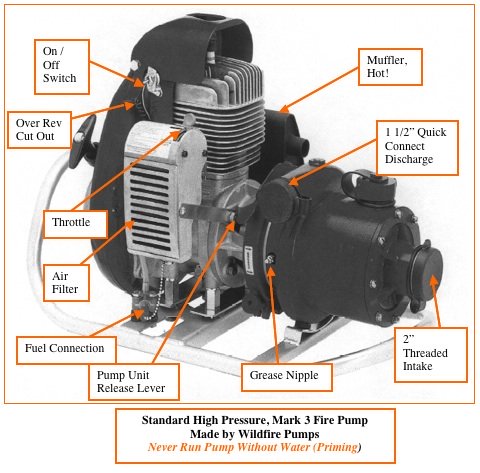
Below is a diagram of a standard MK3 High Pressure Fire Pump. This pump is manufactured by Wildland Fire, formerly, Wajax. There are some important points and safety issues with these and all pumps.
DO NOT COPY - ALL contents - Copyright Protected
DRAM Ventures Inc. / www.firesafetraining.com


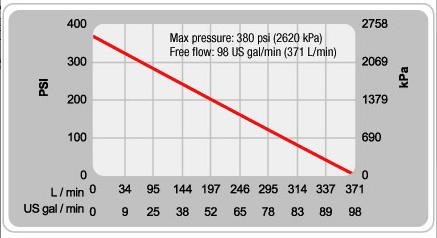
You may find the above chart useful if you wish to calculate how long you can pump out of a limited water source. (i.e. water truck or portable bladder)
Temporary LINK to S100A Primary Fast Track Quiz (24)
If you are signed up for just the S-100A - STOP HERE and;
Click on the LINK above to go to the Quiz and your Certification
FIRE ENTRAPMENT AVOIDANCE & SAFETY
DO NOT COPY - ALL contents - Copyright Protected
DRAM Ventures Inc. / www.firesafetraining.com
Safety Safety Safety
S-185 Fire Entrapment Avoidance & Safety
Approved Online Course
(S-185 Hosted Primary Quiz)
Overview / Introduction
A FAST-TRACK COURSE for those who have completed this course multiple times
Course Fee - $38.00 (2026)
Receive an instant downloadable certificate complete with a wallet card sized one which you may cut out and laminate.
OVERVIEW
This course will teach the participant the basic principles of fire-line safety and in particular, those safety rules pertaining to avoiding a fire entrapment incident.
It is expected that if all fire-line safety rules and regulations are followed, the need may never arise for a fire fighter to have to unexpectedly resort to “last ditch” efforts to save their or other’s, lives.
However, it is well documented where unexpected fire behaviour does occur. In some of these documented cases, several lives have been lost.
It is the goal of this course to ensure that even when the “unexpected” occurs, the fire fighter will know what to do and where to go and in the end, be safe and be alive.
Note: The British Columbia Forest Service – Protection Branch, no longer issue Fire Shelters to their fire crews. Therefore, all fire fighting strategies factor this into the emergency; withdraw and escape procedures as there is no fire shelter available.
It should be noted and remembered that most fireline emergency incidents are a result of someone (or a whole crew) not following ALL of the safe work procedures.
Objective
Upon successful completion of this course the participant will know how to avoid fire entrapment and in the worst case scenario, will be taught how to survive fire entrapment.
SUGGESTED APPLICATION
We consider this e-learning course to be a very thorough and complete compilation of all the similar S-185 material and concepts (and updated with even more information) It can be delivered as a stand-alone course to an individual at home or at work, and it may be used by a wild land fire contractor or instructor as supplemental material for their pre-season, S-185 and Safety workshop or lesson plans.
The S-185 course is an annual requirement for any wildland firefighter employed by a contractor who is planning to work for the Ministry of Forests, Wildland Fire Management Branch in British Columbia, Canada
This course is targeted toward any person who may be involved professionally (their primary job description) fighting wildland fires.
The professional examination system is the same as is used by larger educational institutions. Presents fair assessments and aides to prevent cheating.
Table of Contents
1.0 Course Objectives & Overview
2.0 Fire Entrapment Definition
3.0 Causes for Entrapment
4.0 How to Avoid Fire Entrapment
5.0 Fire Entrapment Survival
Short Quiz
DO NOT COPY - ALL contents - Copyright Protected
DRAM Ventures Inc. / www.firesafetraining.com
S-185 Fire Entrapment Avoidance & Safety
1.0 Introduction
SAFETY IS THE MOST IMPORTANT CONSIDERATION ON ANY FIRE
________________________________
It should be noted and remembered that most fireline emergency incidents are a result of someone (or a whole crew) not following ALL of the safe work procedures.
______________________________
This course will teach the participant the basic principles of fire-line safety and in particular, those safety rules pertaining to avoiding a fire entrapment incident.
It is expected that if all fire-line safety rules and regulations are followed, the need may never arise for a fire fighter to have to unexpectedly resort to “last ditch” efforts to save their or others, lives.
However, it is well documented where unexpected fire behaviour does occur. In some of these documented cases, several lives have been lost.
It is the goal of this course to ensure that even when the “unexpected” occurs, the fire fighter will know what to do and where to go and in the end, be safe and alive.
Note: The British Columbia Forest Service – Protection Branch, no longer issue Fire Shelters to their fire crews. Therefore, all fire fighting strategies factor this into the emergency; withdraw and escape procedures as there is no fire shelter available.
We recently read a statement in a Canadian Wildland Fire Training Manual that said that FIRE ENTRAPMENT WAS GOING TO HAPPEN EVENTUALLY TO EVERYONE AT ONE TIME OR ANOTHER. I believe that statement is very very wrong! The reason - think about it. Fire entrapment means you are TRAPPED and if you are TRAPPED that means you may DIE! Straight and simple. One very common denominator with all fire entrapment fatalities is that the fire burned over their position. Those very unfortunate and brave souls were trapped and unable to get away to a safe zone! In our opinion, it seems the creator of that course has given up already. That is like saying that every person who drives a vehicle is going to be in an accident! Listen, firefighters, OF COURSE YOU NEVER WANT TO BE TRAPPED, AND THIS COURSE MAY HELP YOU CONSIDERABLY TO AVOID EVER BEING TRAPPED.
Three sides of Fire Triangle
Heat
Oxygen
Fuel
Basic Fire Behaviour
Wind is typed in red because of all the weather related conditions, the sudden changes and movement of air (wind) can be the most critical to fire control attempts and to the fire fighter’s personal well being.
Many fire entrapments are a result of sudden and unexpected winds and wind direction changes.
Section 2.0 Fire Entrapment - Definition
Who is responsible? EVERYONE!
Fire Entrapment
This is a situation on the fireline when current fire behaviour prevents at least one firefighter from escaping an oncoming fire and from using a designated escape route and a safe zone. Once entrapment occurs the life of at least one firefighter is in imminent danger and a fatality may be the end result.
Avoidance
Remember Kenny Roger’s song, “THE GAMBLER”
“...You got to know when to hold 'em, know when to fold 'em,
Know when to walk away and know when to run. ...”
“folding” is knowing when to cease operations on a particular portion of the fireline, or on the whole fire, and pull back to designated safe zones.
“tactical withdraw” (you are “walking away) is leaving the fireline without the need to declare an emergency and with no panic involved. A quick, calm and orderly withdraw.
“evacuation” on the other hand is a scenario that is in the realm of an emergency (you may be running for your life) which could very quickly lead to an entrapment situation. It is the goal of this course to enable the firefighter to learn and know the difference and plan ahead so that only “tactical withdraws” are required.
Section 3.0 Causes for Wildfire Entrapment
3.0 Causes for Entrapment
There are many causes of fire entrapment incidents. AND it is very common to be a combination of one or more of these causesthat in the end, lead to a fire entrapment incident.
All firefighters know there are three main factors that influence how a fire burns (behaves)
These are; Fuel, Weather & Topography
3.1 Hazardous Fuels
3.2 Hazardous Weather
(I have personally seen fine, cured grass burn at a 3% RH and it behaved as though gasoline was poured on the grass! - and that was on flat terrain and with no wind!)
- the Drought Code (DC) of the weather indices, continues to indicate drying fuel deeper in the soil and into the “heavier” woody debris, as the summer season progresses. This occurs almost all of the time, but is accelerated if there is a long term lack of moisture. (low winter snow pack and or drought-like conditions
(during spring and summer)
3.3 Hazardous Topography
______________________
Fires usually burn upslope much faster than a firefighter can run.
Fires WILL travel quickly upslope in draws, gullies, or ravines.
Never position yourself or crews directly above a fire.
Safe Zones must be downslope and “out to the sides” of the fire.
______________________
Several years ago a logger on the west coast of B.C. was attempting to escape a fire (caused by a spark from a haul-back block) by running upslope in a gully in an attempt to reach to a road where his truck was parked. He was not successful.
This fatal incident is the primary reason all forest workers in British Columbia must be trained in the basic fire fighting safety skills (2 day S-100 Course) AND renew this annually with the S-100A Course.
______________________
Not understanding any one of the above factors may lead to a fire entrapment incident.
There are still more factors that may lead to fire entrapment.
3.4 Human Factor (during times of great stress we can only focus on about 7 factors)
Your Mind
Attitude - you must have a SAFETY FIRST ATTITUDE!
The attitudes below may kill!
These attitudes are often a result of inexperience and overinflated egos. Being over aggressive is sometimes an attempt to cover for the lack of experience or knowledge required to safely carry out a job.
Bad Supervision
All the above may lead to very poor supervision
- this can be a tough one to deal with
- may be trying to “score points” for a promotion
- lack of respect toward his / her crew
- may have a “oh don’t be a wimp” mind set
These type of supervisors usually don’t last long in the system - but ...
______________________________
I can recall many many times (too many) when there were poor supervisors on the fireline. In my earlier years as a firefighter it WAS often difficult to deal with. In later years as an Incident Commander and staff person, it was much easier, and I found it rewarding to be able to take an individual aside and work with them (time and circumstances permitting) to help change a poor supervisor into a good one
________________________________
lack of knowledge
lack of experience
________________________
Your Body
- short term - you must get a good sleep after each shift
- long term - (days and weeks especially with rigorous and long work hours) can have devastating and fatal impacts on yourself and or your crews. Sleep deprivation is accumulative and can lead to poor decisions, physical accidents and illness
heat exhaustion
heat stroke
______________________________________
3.5 "Hardware"
Motor Vehicle
Equipment - Not vehicle or heavy equipment
- hard hat (date and style compliant)
- gloves
- cotton, wool, or Nomex clothing (it is normal for fire
crews to be required to wear Nomex)
- sturdy, high topped leather boots with “Vibram” type soles
- no steel toes (check with your jurisdiction working in)
- no contact lenses
- safety goggles
___________________________
Interface Fire Zones
There are some "special" precautions and considerations when working in or near communities.
- stay upwind, do not breath the smoke, move away but don’t go into low areas
- warn other crew and civilians
- prevent entry by other persons
- communicate this situation to your supervisor
- inadequate training
- improper safety equipment
Section 4.0 Wildfire Entrapment Avoidance
Wildfire Entrapment Avoidance
Pre-Work Crew Safety Briefing
Mandatory
L.A.A.C.E.S.
Lookout
Most fires should have an experienced person posted as a lookout to watch over the overall fire behaviour and to report fire behaviour changes immediately
Anchor point
This is a designated point along the fireline chosen as the place where the initial attack will begin. All safety hazards have been assessed and escape routes (minimum of two) have been established)
Awareness (situational)
Each person on the fireline must be aware of their surroundings at all times. (See Lookout)
Also, look up in the sky often. The cloud pattern can tell you a huge “story” regarding winds and weather changes approaching
The first established escape routes, over time (one or two hours or days) may no longer be valid for you. These could now be too far away to be effective or they may have been burned over and no longer usable.
Be aware of danger trees
Be aware of your fellow workers and how they may be doing. Is someone showing signs of heat exhaustion?
Communication
You must ensure the technical (radios, cell phones, etc.) are working well and that you can transmit and receive messages wherever you are working along the fireline.
You must also communicate with your fellow crew persons and supervisors about all events that you see happening in your area.
A very important aspect of communication is also keeping detailed notes AND to be listening for and noting any weather reports, etc.
Escape Routes
You must have and know where at least two escape routes are located. You must know how long it will take at a brisk walking speed, how long it will take to follow those escape routes to safe zones.
That time and more must be allowed for when deciding upon a Tactical Withdraw.
Escape Routes must;
Safety Zones
These must be established prior to any commencement of work on the fire. These must be large enough to protect the firefighters from not only the actual flame but from the radiant heat.
Safety Zones;
CAVES SHALL NEVER BE CONSIDERED A SAFE LOCATION (SUFFOCATION MAY OCCUR - THIS IS ONLY TOO WELL DOCUMENTED IN HISTORY)
____________________________________________________
10 Standard Firefighting Orders
____________________________________________________
“WATCH OUT”
(very similar but another way to remember safety rules)
W-A-T-C-H - O-U-T slogan for fire line safety.
W - weather dominates fire behaviour
A - action is based on what the fire is doing
T - try out at least two escape routes
C - communications, keep them clear and simple
H - hazards such as snags, flash fuels and dangerous terrain must be observed
O - observe changes in the weather
U - understand your instructions
T - think clearly, stay alert and keep calm at all times
SITUATIONAL AWARENESS
Maintain At All Times
Here are some basic but very important indicators to watch for which will “tell” you the fire behaviour is intensifying;
Four Common Denominators of Deadly Fire Entrapment Incidents
Section 5.0 Wildfire Entrapment Survival
(Probable Life Threatening “Last Resort” Situation)
(you are now in an emergency situation - it is assumed you are unable to use an established escape route or you become trapped while on an escape route heading to a Safety Zone)
On the fireline
You are now looking for an Emergency Survival Zone!
Go to the nearest Safety Zone and communicate location to supervisors and IC
Stay there until it is safe to move back to main staging area (or fireline if so ordered - not a usual procedure as a crew incident briefing should be conducted)
Vehicle (not heavy equipment)
If you make it to your vehicle and decide to drive out to safety, you must consider the following;
Using Vehicle to escape
Deciding to not drive vehicle to escape
Heavy Equipment - (bulldozer, loaders, excavators)
Building
Fire Line Safety Recap
Safety on any work site begins with an attitude. … and this attitude must be that safety is number one. In the case of a wildland fire fighter, safety is first and controlling and putting out the fire is always a lesser consideration.
Fire fighters are responsible for their own safety and for the safety of their fellow workers. Whenever a fire fighter is injured, the whole fire attack plan may have to be reconsidered and changed. This could be to the extent of pulling all crews from fire suppression activities until the medical emergency incident is over.
DO NOT COPY - ALL contents - Copyright Protected
DRAM Ventures Inc. / www.firesafetraining.com
DO NOT COPY - ALL contents - Copyright Protected
DRAM Ventures Inc. / www.firesafetraining.com

S-100A Annual Safety Refresher Course
When you have successfully completed the 2 Day, S-100 Course, you must remember to renew annually. The annual renewal course is called the S-100A Annual Safety Refresher.
Our annual safety refresher course is recognized by the B.C. Ministry of Forests, as well as W.C.B.
Doug Richardson
Course Administrator
firesafetraining@gmail.com
We wish to acknowledge and thank all organizations and persons for the use of all videos and photos on this web site.